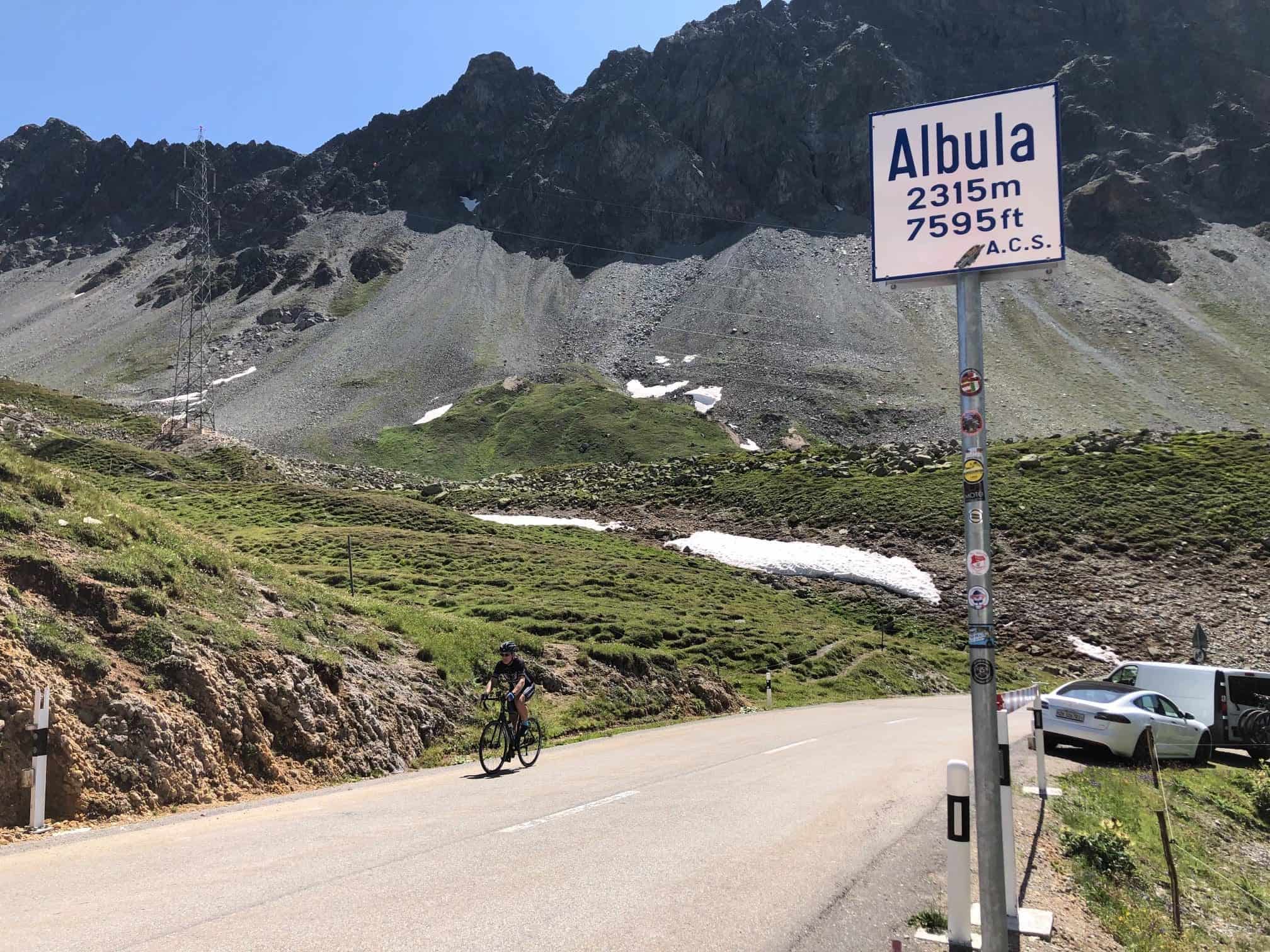
The most beautiful climb in Graubünden
The Albula Pass (2,312m) connects central Graubünden with the Engadin and sits right at the heart of the region’s best riding.
It’s widely regarded as one of the most beautiful climbs in Switzerland, helped by the constant presence of the UNESCO-listed Albula Railway weaving through the mountains beside you.
If the Flüela is about steady altitude and the Julier about efficiency, the Albula is about pure riding pleasure:
- Varied gradients
- Dramatic landscapes
- Ever-changing surroundings
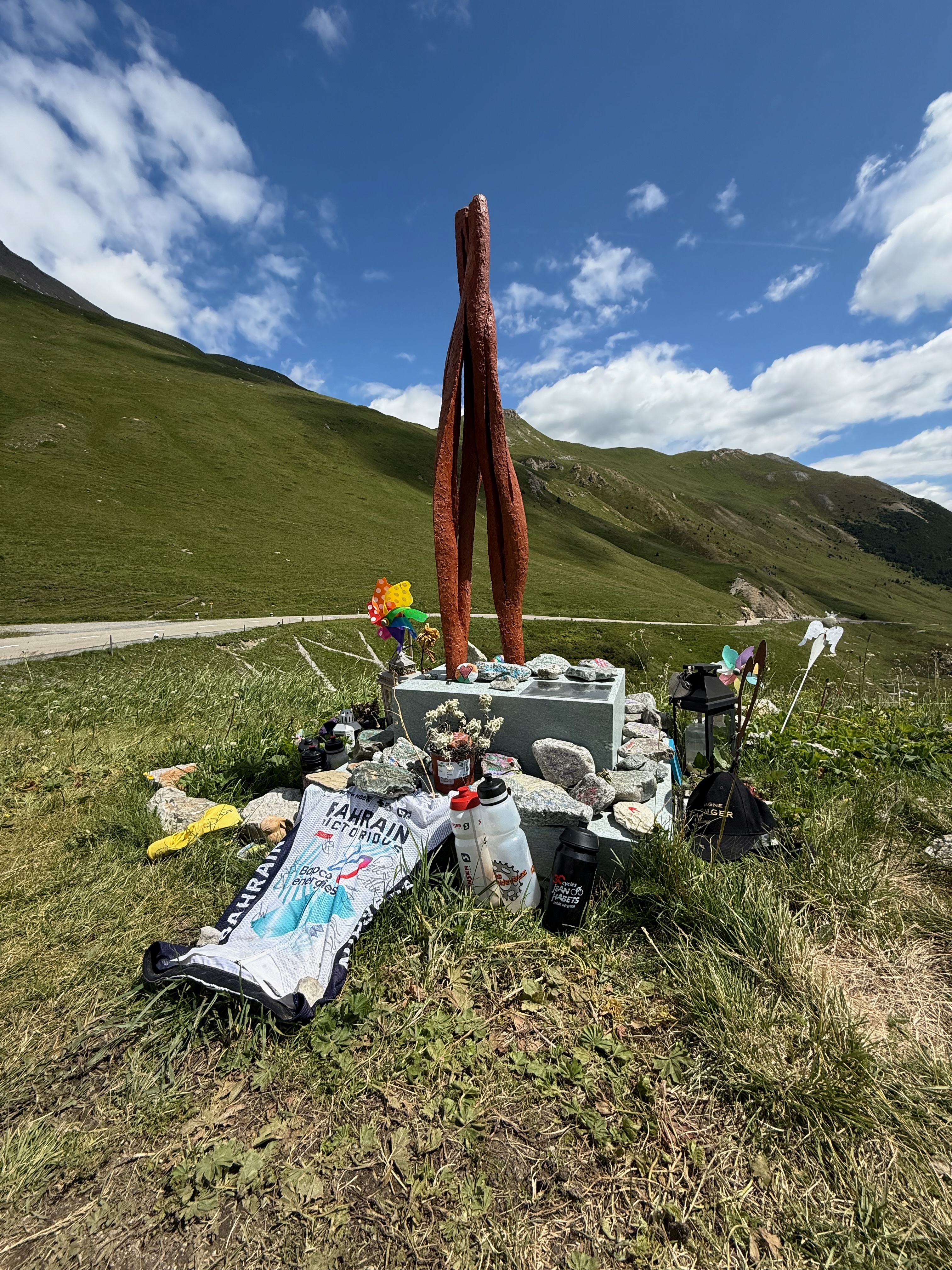
Gino Mäder
The road forever carries a quiet echo of Gino Mäder. On the sweeping descent of the Albula, where speed blurs the line between control and commitment, Gino Mäder lost his life after a crash during a Tour de Suisse stage in 2023—an event that shook the cycling world to its core.
Mäder was a rare kind of rider: fiercely competitive yet deeply compassionate, known as much for his attacking spirit in the high mountains as for his humility off the bike. The Albula, with its fast, technical drops and unforgiving edges, stands as a stark reminder of both the beauty and the risk woven into alpine cycling.
Riding here today invites a moment of reflection—not just on the thrill of the descent, but on the fragility of it all, and on a rider whose legacy lives on in the way he raced, cared, and inspired.
Why ride the Albula Pass
- Constantly changing scenery: from narrow gorge to open alpine plateau — this is one of the most visually varied climbs in the Alps.
- The Albula Railway: running alongside the road, the historic railway adds a unique dimension with viaducts and spiral tunnels appearing throughout the climb.
- Narrower road, quieter feel compared to Julier or Flüela:
- Narrower carriageway
- Less transit traffic
- More “old-school” alpine atmosphere
Traffic & Conditions
- Generally lower traffic than neighbouring passes
- Road can be narrower and more technical in places
- Usually closed in winter (roughly late autumn to spring)
- Good surface throughout
When to Ride
- Best months: June – September
- Early mornings are best for minimal traffic
- Late season (September) is particularly scenic in the Engadin
Tiefencastel / Filisur
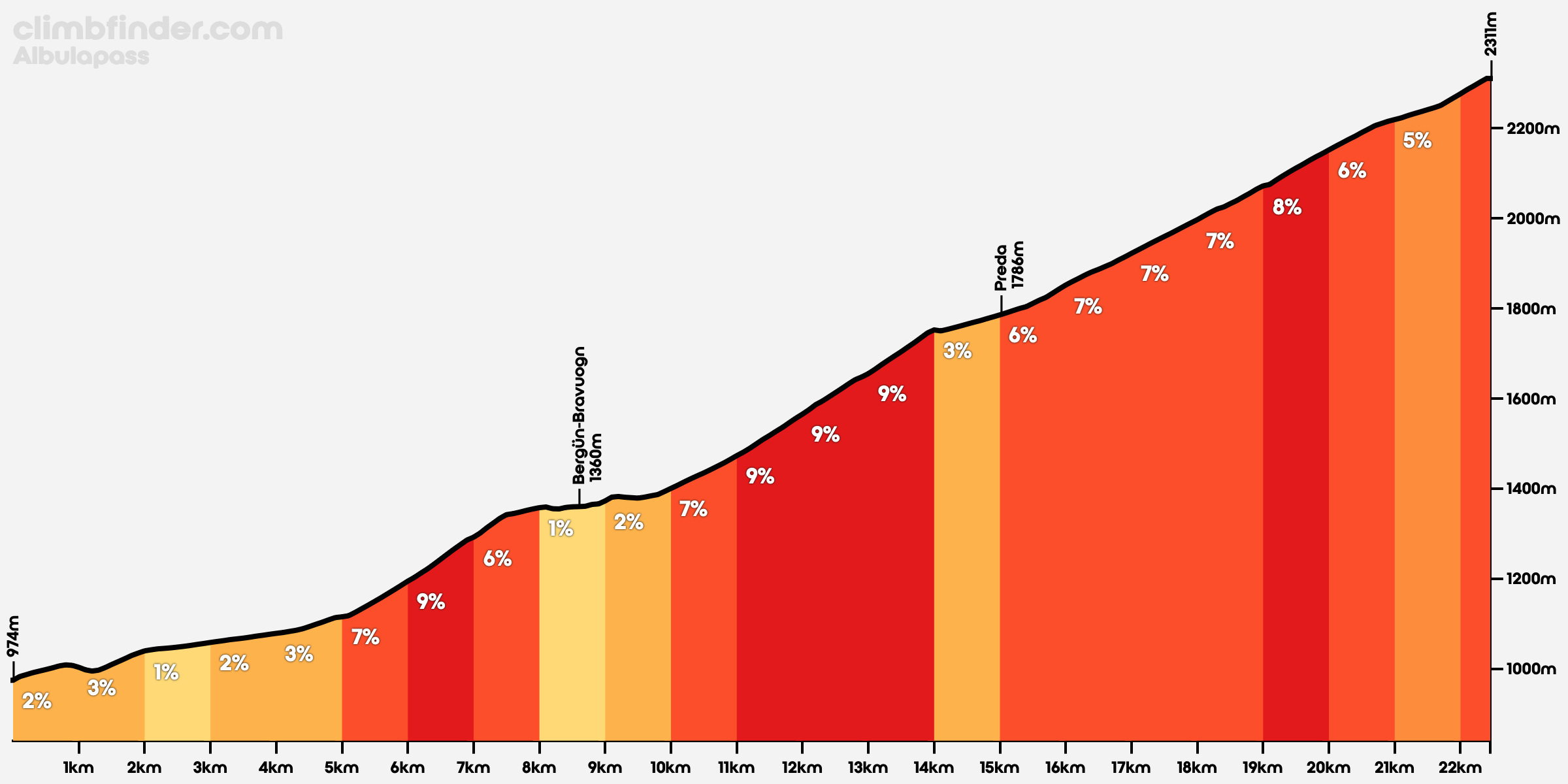
This is the classic Albula ascent — and it climbs in very clear phases.
Phase 1: Valley approach (~13km)
The climb starts deceptively easily:
- Long valley stretch
- Gradients mostly below 5%
- Only short touches above that
This section is all about positioning and patience. It barely feels like a proper climb yet — just a gradual rise deep into the mountains.
Phase 2: Bellaluna ramps (~2km)
The character changes abruptly.
- Around Bellaluna, the road kicks up hard
- ~2km at around 10%
- The first real test of the climb
This is where you suddenly realise Albula isn’t just a long drag — it’s going to hurt.
Phase 3: Bergün to Preda (~4km)
After a brief reset, the climb hits its second major block:
- ~4km around 9%
- Sustained and demanding
- Iconic section with railway viaducts and tunnels overhead
This is one of the defining stretches of the climb — long, steep, and visually spectacular.
Phase 4: Final ascent (~7km)
Once past Preda, the climb settles into its final form:
- Long, steady 7–8% effort
- No major ramps, just constant pressure
- Gradually opening into high alpine terrain
It’s not explosive anymore — just a proper endurance grind to the summit.
La Punt
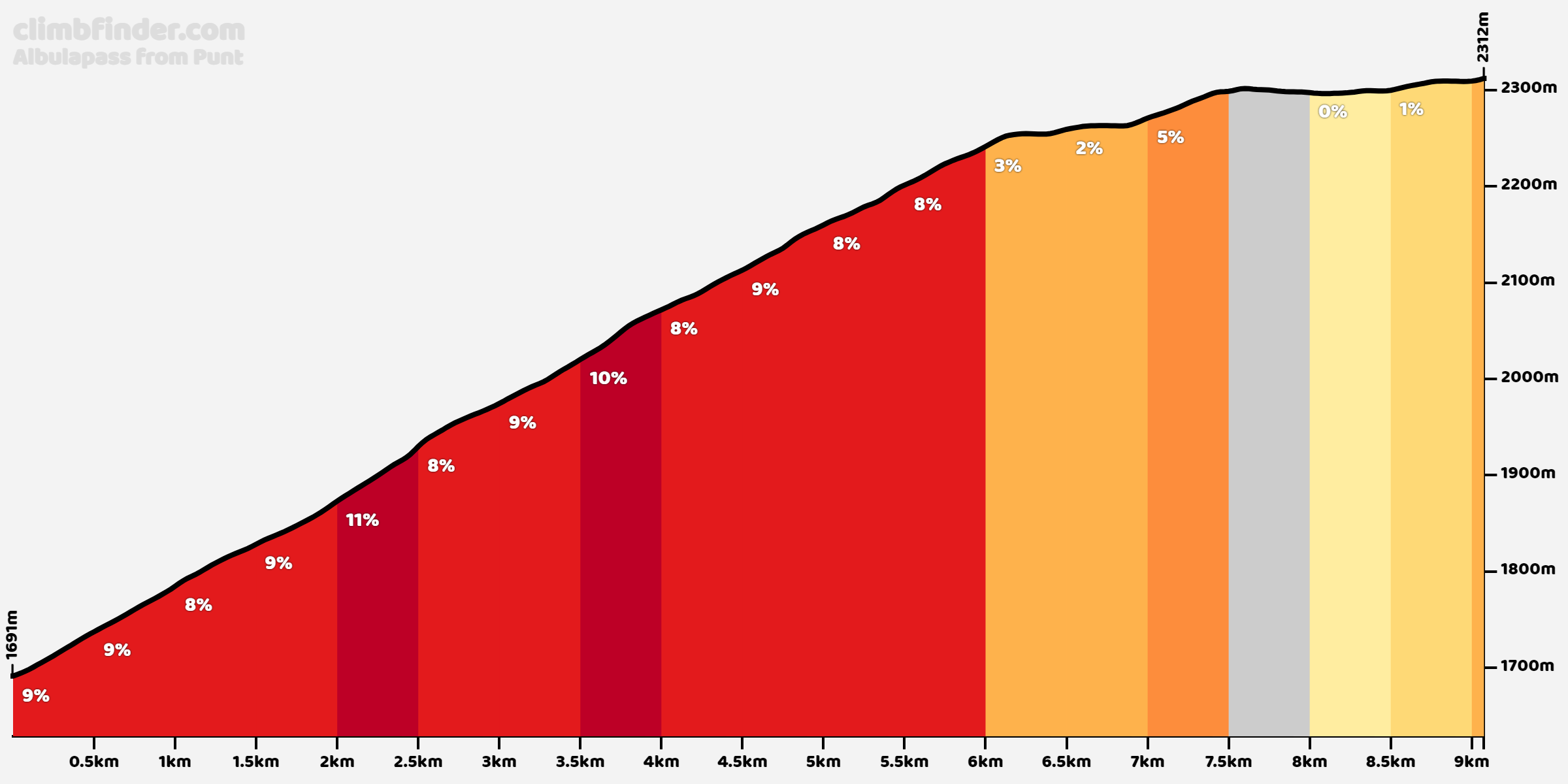
Shorter, sharper — and far more brutal than the numbers suggest.
Right out of La Punt, the climb doesn’t give you any time to settle:
Phase 1: Opening ramps (~6km)
- Relentless climbing from the start
- Around 9.4% on average
- No real recovery sections
This is the defining feature of the climb — a sustained, high-gradient effort that forces you into the red early.
Phase 2: Upper section (~3km)
After the main effort, the climb changes completely:
- Gradients drop dramatically (~2.1%)
- Road straightens and opens up
- The effort fades just as the scenery expands
Unlike many Alpine passes, the Albula from La Punt gets easier the higher you go.
Route Ideas
Albula–Flüela Loop
The most balanced pairing.
- Big alpine loop
- Mix of steady (Flüela) + varied (Albula) climbing
- One of the best days you can ride in Graubünden
Albula-Julier Loop
The most natural loop from the Engadin side.
- ~100km riding
- ~2200m climbing
- Two very different climbs:
- Albula = varied, scenic, technical
- Julier = more consistent and open
This is arguably the best all-round ride in the region, which is why I did it twice, in both directions, during my Tour de Suisse 2019, stages 1 and 5.
Albula → Bernina (Point-to-point)
Unlike the Flüela, extending to the Bernina actually works well.
- Flow through the Engadin valley
- Logical progression south
- Builds into a proper high-alpine traverse
This is less about looping — and more about linking iconic terrain into a bigger journey.
I did this too, as Prologue of my Giro d’Italia 2025.
Verdict
The Albula is the complete Alpine climb.
It doesn’t rely on extreme gradients or iconic hairpins. Instead, it delivers:
- Variety
- Flow
- Scenery
If you had to pick one climb in Graubünden that balances everything, this is it.
One of the best rides in Switzerland — full stop.