Endurance climb
Length, accumulation, and pacing define the challenge
The Col du Granon (2,404m despite the 2,413m sign) is a pass in Haute-Alpes department of the Provence-Alpes-Côte d’Azur.
In the 1930s an infantry structure was built near the summit, but the Granon has never been the scene of fighting. However, the 7th Battalion of the Alpine Hunters – Les Diables Bleus – sometimes use it as a field for military exercises.
The Col du Granon is not defined by how it starts, but by how it changes.
At first it presents itself as a long, steady effort—something you can manage through pacing and control. The first 6 kilometers are almost a warm up, and the road allows you to settle into a rhythm that feels sustainable.
Then you turn off the main road, the gradient increases a bit, but changes abruptly above Villard‑Laté.
From that point on, the gradients become sustained, steep, and unrelenting, and whatever pacing strategy you carried from the valley stops working. What began as an endurance effort turns into something closer to a continuous high-gradient climb, where forward progress depends less on rhythm and more on simple resilience.
What makes Granon distinctive is this transition:
- It does not announce itself early
- It allows you to settle
- And then it removes that option entirely
The final 10 kilometres are not just harder—they are structurally different:
- fewer interruptions
- fewer opportunities to recover
- a constant need to manage effort under fatigue
In that sense, Granon sits between categories:
- not a “wall” from the start
- not purely an endurance climb either
It is an endurance climb that becomes something else.
Granon suits riders who:
- understand how to manage effort across phases
- are comfortable with a climb that tightens its demands over time
- and are willing to trade a clean profile for a more decisive finish
Tour de France
During the 1986 edition of the Tour de France, the finish of the 17th stage from Gap was the first finish at the pass.
That was the stage that Bernard Hinault lost his yellow jersey to the Greg LeMond, who went on to win the Tour.
Hinault later recollected his memories of that ascent: “I don’t remember suffering from the lack of oxygen, but rather from the hard slope without any respite.”
Obviously, I only found that quote after I experienced that myself…
Until 2011, when the Col du Galibier (2,642 m) was in the 18th stage, it was the highest stage finish in the history of the Tour.
Stage 11 of the Tour de France 2022, with the finish on the Granon summit, was won by Jonas Vingegaard who took the yellow jersey from Tadej Pogačar and went on to win that Tour.
Briançon
Starting from Briançon, the Col du Granon is an endurance climb, but from Villard‑Laté onwards, the climb behaves less like a typical Alpine ascent and more like a continuous steep effort, closer in feel to the hardest Italian climbs—without their extreme gradients.
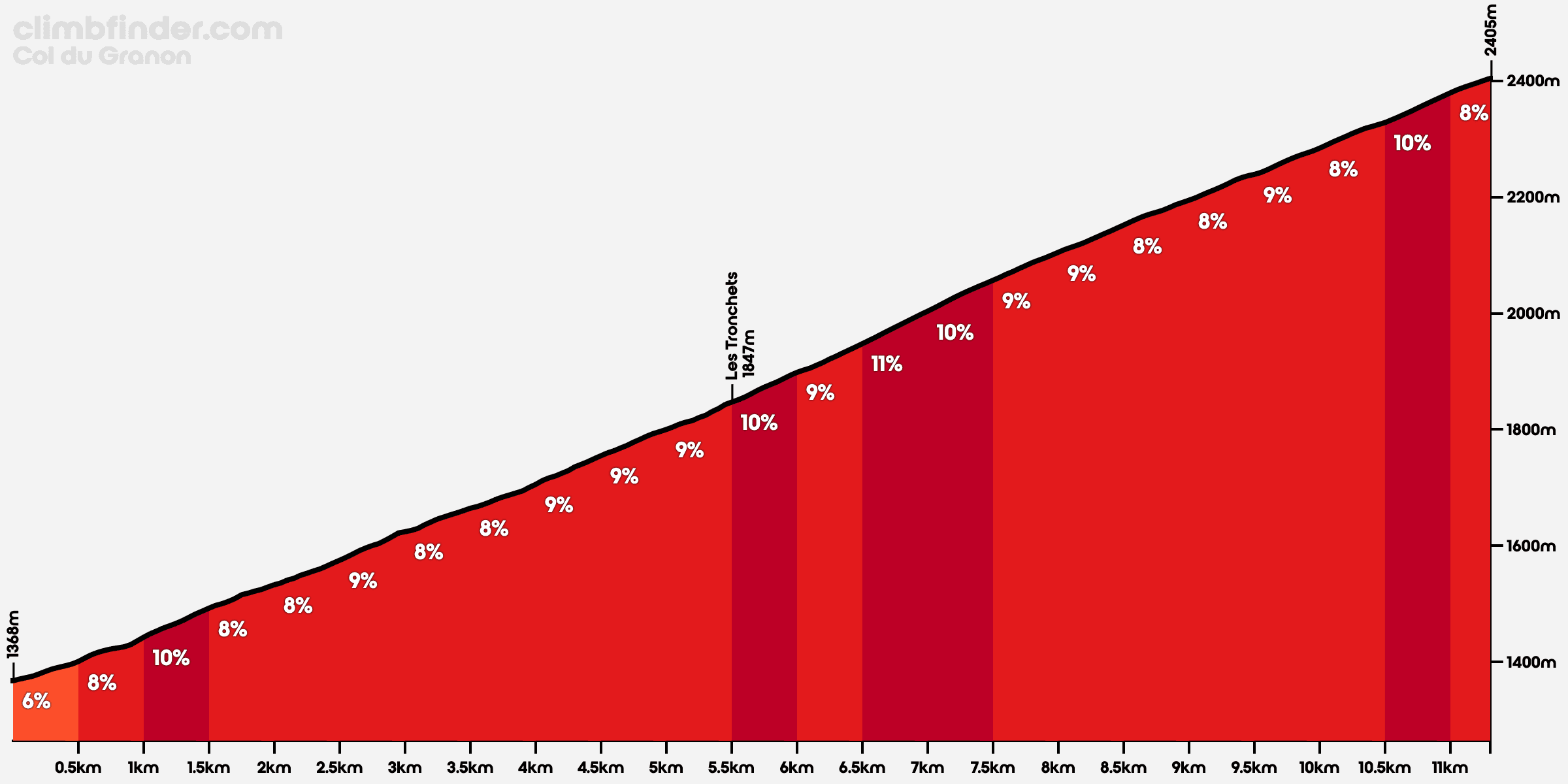
The ascent is 16.8 kilometers long, at an average of 7.1%, with the first 5.5 kilometers little more than false flat and the real climb starts when you turn right from the main road onto the Route du Granon.
From there, a kilometer in, the real misery starts at le Villard-Laté: 10.5 kilometers at a relentless 9.5% – 5.6 kilometers over 10% and a steepest kilometer at 11.3%.
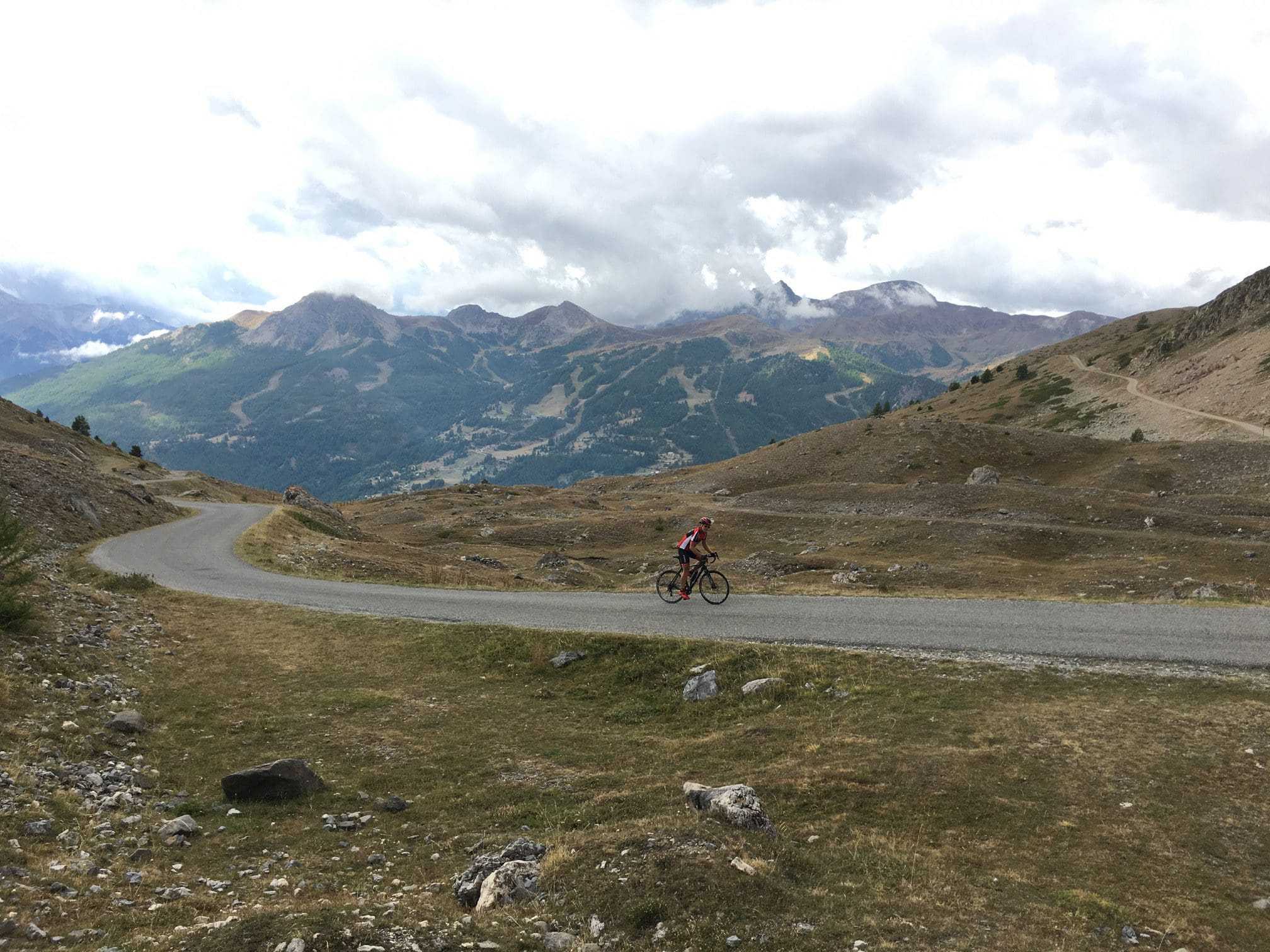
The landscape and the views higher up are breathtaking, though.
I cycled a cold Granon during my Tour de France 2017, stage 5, when we had our base camp in Briançon.
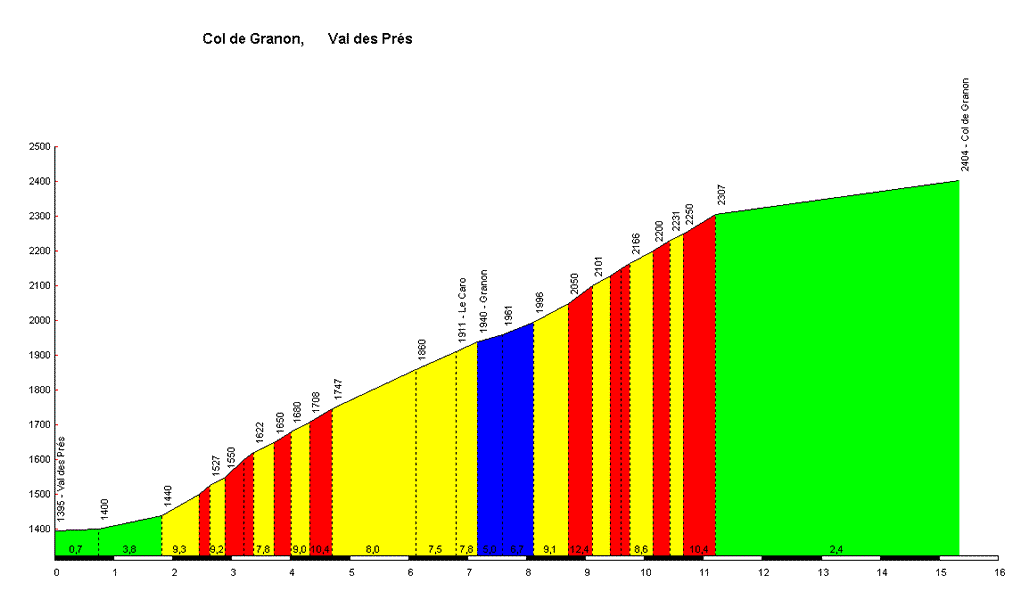
Val-des-Prés
While it is a pass, the Granon is only paved on the Briançon end and the unpaved route from the east starts in Val-des-Prés.
That is 15.3 kilometers long at an average of 6.6%, but in some parts the gradients match those of the Briançon end.