The climb the Aspin wishes it was
The Hourquette d’Ancizan (1,564 m) is a relatively new addition to the Tour de France, only introduced in 2011, but it didn’t take long to leave an impression.
For a century, the nearby Aspin carried the weight of history. Then the race looked sideways — and found something quieter, sharper, and arguably better.
Why ride the Hourquette
What sets the Hourquette apart is clarity — of road, of scenery, of experience:
- Modern feel: smoother, cleaner, more deliberate than older Pyrenean climbs
- Quieter roads: less traffic, fewer distractions
- Open exposure: wide views that appear earlier and last longer, especially on the Payolle side
- Distinct sides: one sharp and selective, the other long and flowing
- Insider reputation: often preferred over the better-known Aspin
This is a climb that feels designed rather than inherited and it’s not about altitude dominance. Instead, it delivers visual elevation:
- Big skies
- Wide pasture
- Long, uninterrupted sightlines
Where many Pyrenean climbs hide in forests, the Hourquette steps out into the light.
Tour de France
The Hourquette’s story is one of disruption:
- First used in 2011, as an alternative to the Aspin, total of 6 appearences since then
- Quickly became a favourite for route designers looking for variety
- Often inserted into Pyrenean stages to break familiar patterns
The Ancizan end is a categorie 1 climb, the Payolle end is categorie 2 – Thibault Pinot is the only rider who twice passed the summit first.
The Hourquette doesn’t replace the classics — it reframes them.
Climbing character
The defining feature here is contrast between sides — and clarity within them:
- One side direct, steep, and relentless
- One side gradual, expansive, and controlled
- Both leading to a summit that feels open rather than enclosed
Unlike the Balès (irregular) or Aubisque (layered), the Hourquette is clean. It tells you exactly what it is — and then delivers it.
This is a climb about precision: clear effort, clear response.
Practical notes
- Road quality: excellent throughout
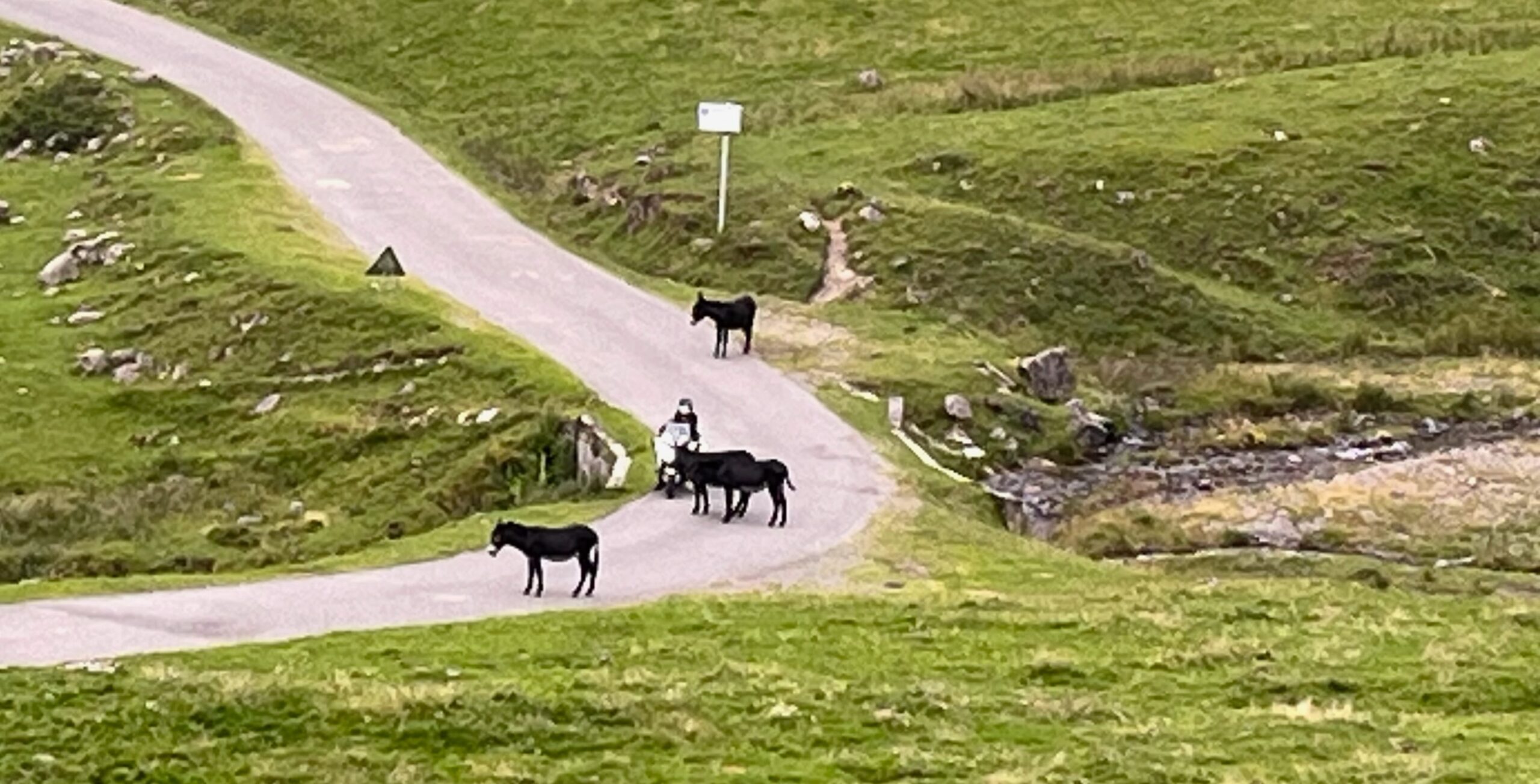
- Traffic: generally light, quieter than Aspin, livestock common near the summit and in the lowest point of the drop, at the Ruisseau flow
- Environment: forest low down, open pasture higher up
Ancizan
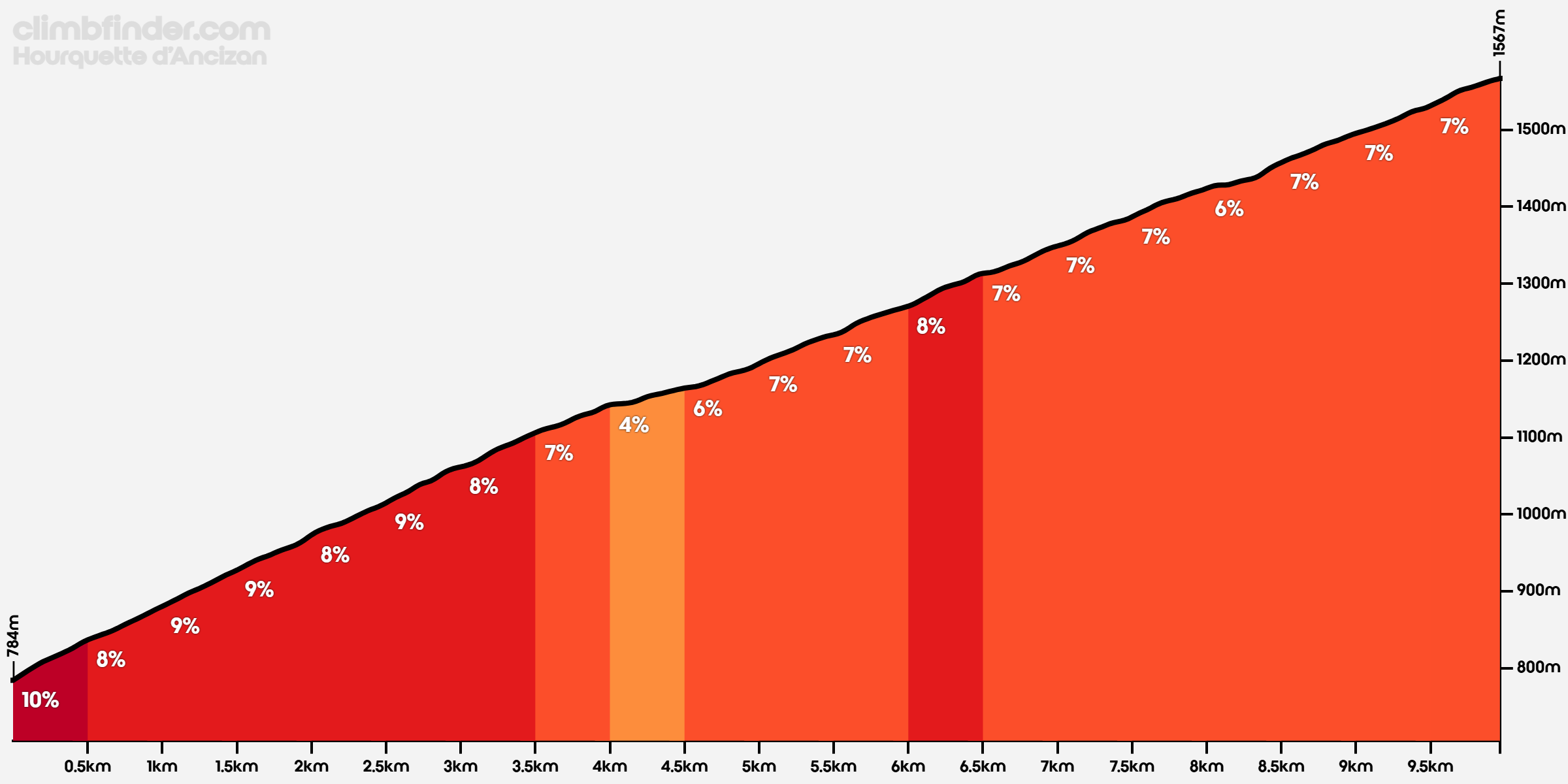
The Ancizan side is the true test — shorter, sharper, and immediately engaging.
From the first kilometres, the gradient makes its presence known. There’s very little soft introduction — the climb steps up quickly and holds you there, with early ramps that demand respect before you’ve fully settled into rhythm.
Much of the lower section runs through forest, limiting views but focusing the experience. It feels enclosed, almost compressed, forcing you to concentrate purely on the effort.
As you climb higher, the trees begin to thin and the landscape opens. The transition is sudden and rewarding: from tight and shaded to wide and exposed, with views back into the Aure valley.
The upper section doesn’t spike dramatically, but the damage is already done — this is a climb that takes its toll early and never really gives it back.
This side is about commitment — it starts hard, and expects you to adapt.
Campan / Payolle
The western approach is longer, smoother, and deceptively composed.
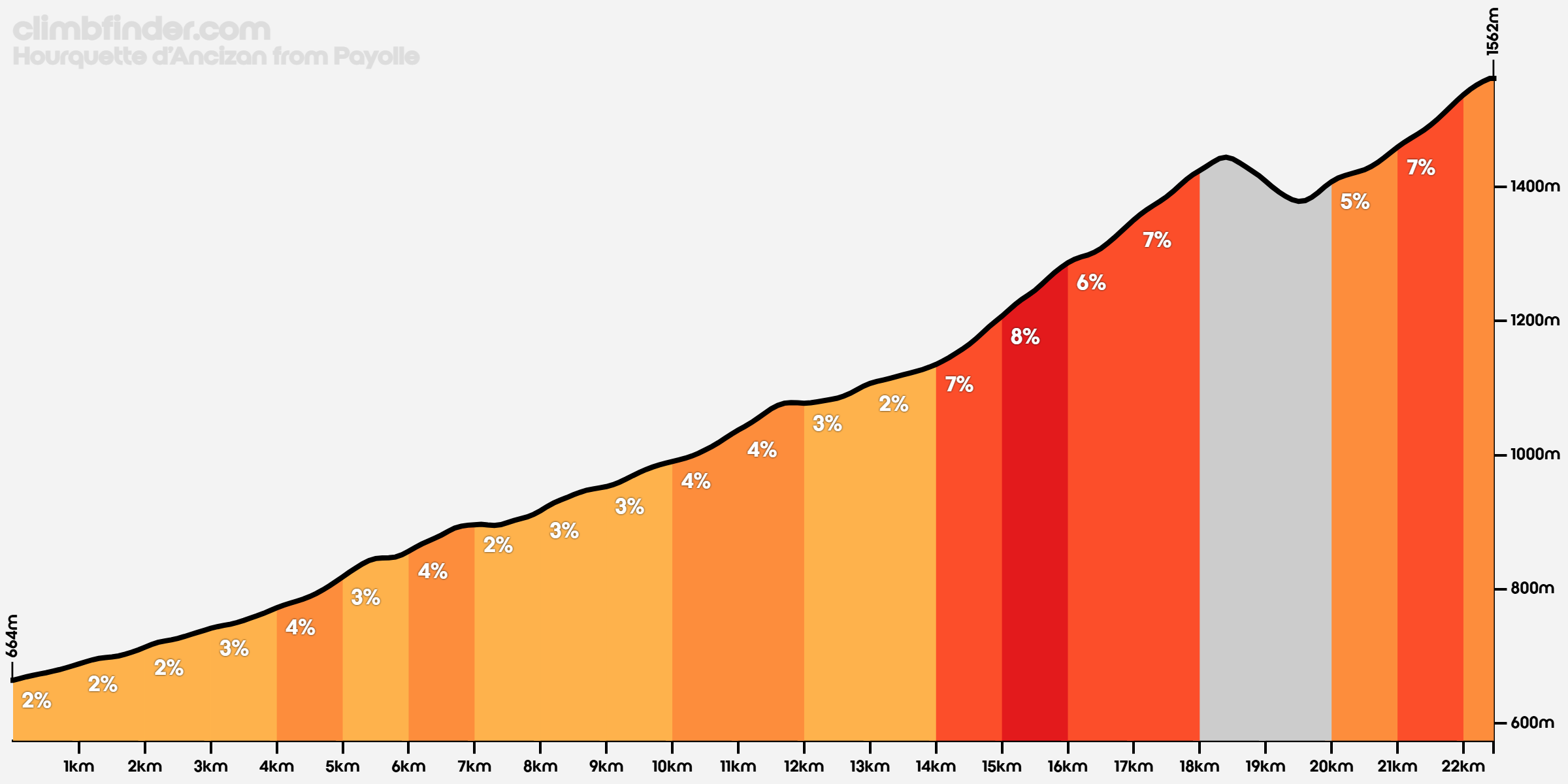
It begins alongside the Aspin route, following the same valley toward Lac de Payolle, where the road feels relaxed and almost incidental. The effort here is controlled, building gradually without urgency.
At Payolle, everything changes.
Turning off the Aspin, the climb shifts character — the road narrows slightly, the gradient becomes more defined, and the landscape begins to open into wide mountain pasture. This is where the Hourquette separates itself.
Unlike the forest-heavy Aspin, this side feels spacious and panoramic, with long lines of sight and a stronger sense of elevation than the altitude alone would suggest.
There’s even a break in rhythm mid-climb, a short downhill before the final approach to the summit. It’s not enough to fully recover, but just enough to reset before the last effort.
This side is about flow and progression — a climb that builds, opens, and carries you upward.
I cycled both ends in stage 2 of my Tour de France 2023, with a little detour to the Granges de Lurgues, which made the stage too hard for me.
Bike Rebel Verdict
The Hourquette d’Ancizan is what happens when you step away from tradition and find something better.
It doesn’t carry the legacy of the big names — but it doesn’t need to. It’s a climb defined by clarity, contrast, and quiet superiority
Ride the Aspin because it’s famous, ride the Hourquette because it’s better.