The reference point. Not because it is extreme, but because it contains everything.
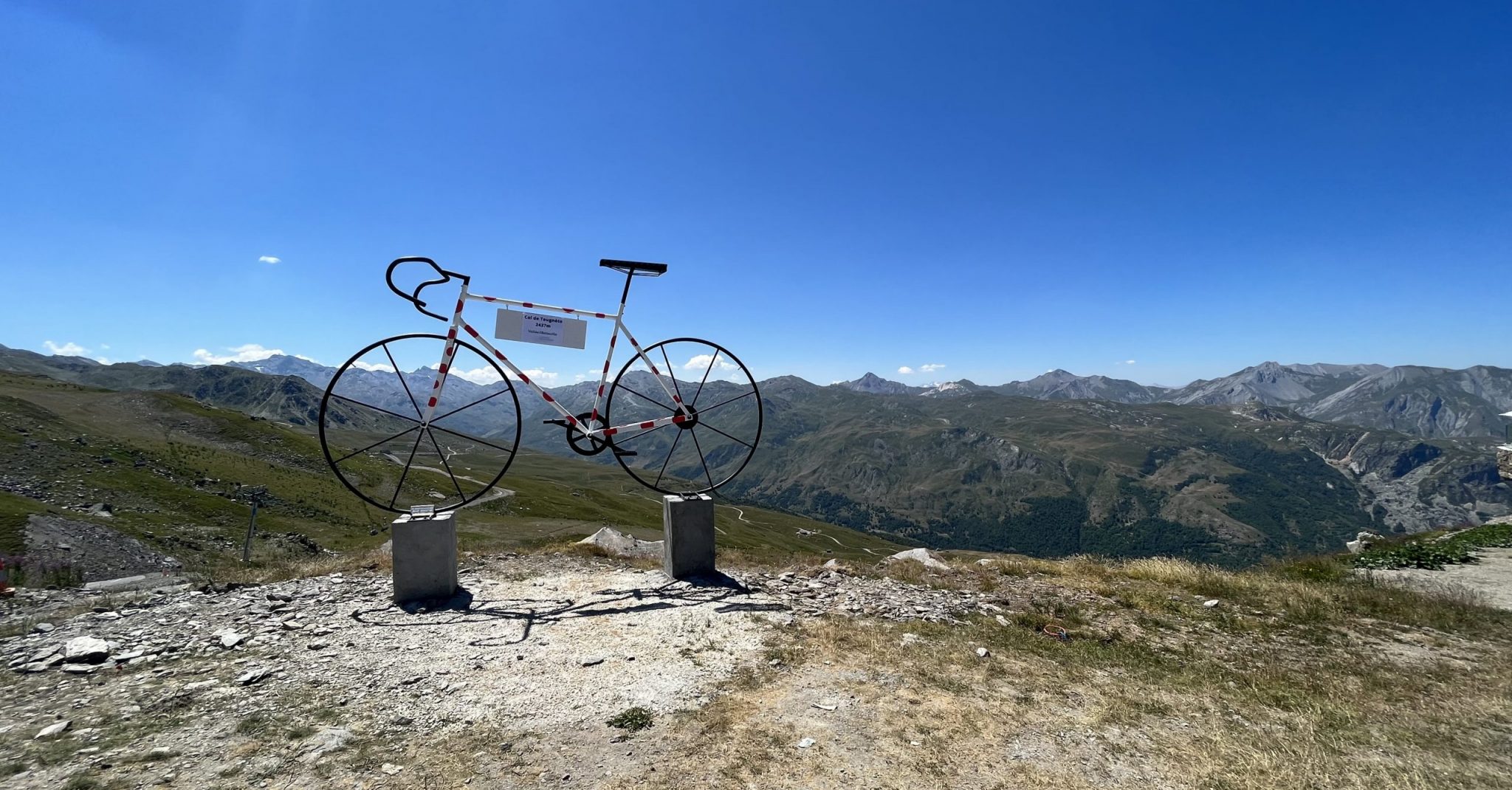
Col de Tougnète rises to 2,430 meters in the Vanoise massif, as a piste cyclable forking off the road to Val Thorens (2,340 m) at Les Menuires.
It is not the highest climb in France, not the steepest, not the longest. But it is the one where those distinctions stop mattering.
Defined as the hardest climb in France not for a single characteristic, but for how it combines them: accumulation, irregularity, and late-stage instability.
This is not a climb you compare to others, it is the one you use to understand them.
The Shape of the Climb
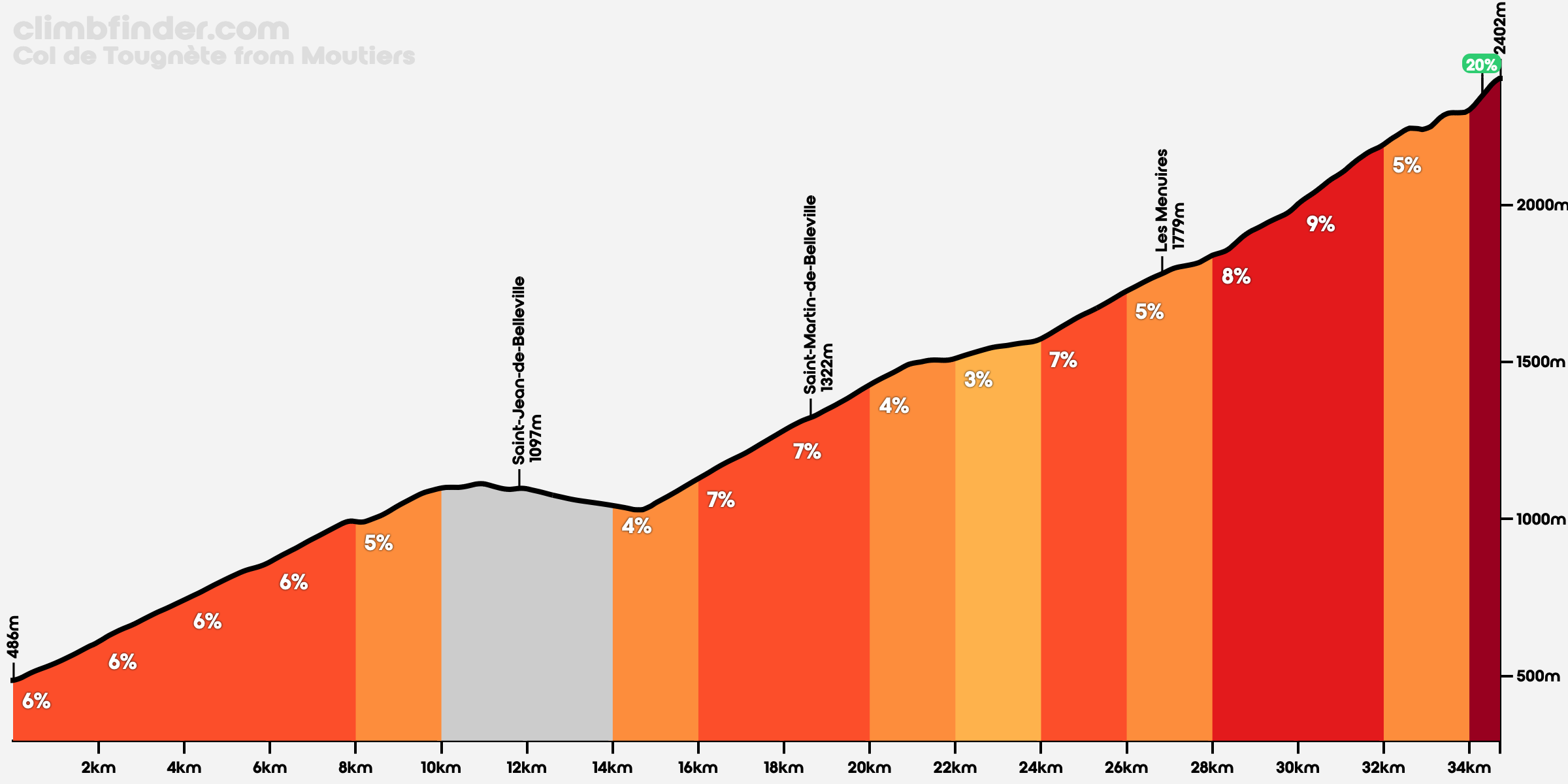
From Moûtiers, Tougnète is a full-system effort:
- ~30 km
- ~1,950–2,000 m elevation gain
- ~6–6.5% average gradient
On paper, it resembles a classic French Alpine climb and that is accurate—but incomplete.
What defines Tougnète is not its averages, it is what happens after you’ve already committed to them.
Where It Changes
The climb divides cleanly:
- Lower climb (Moûtiers → Les Menuires): accumulation
- Upper climb (Les Menuires → summit): disruption
The break comes late—and deliberately.
Moûtiers → Les Menuires
Tougnète does not begin with a single climb, it begins with a choice.
Via D117
Direct. Structured. Easy to misjudge.
- Main valley road
- More traffic
- More consistent gradient
This is the cleaner line:
- Easier to settle into rhythm
- Easier to measure effort
- Easier to ride efficiently
It presents the climb as manageable, and the problem is not what it demands, the problem is what it allows.
You can ride this slightly too hard for a long time—and nothing will stop you.
Via D96
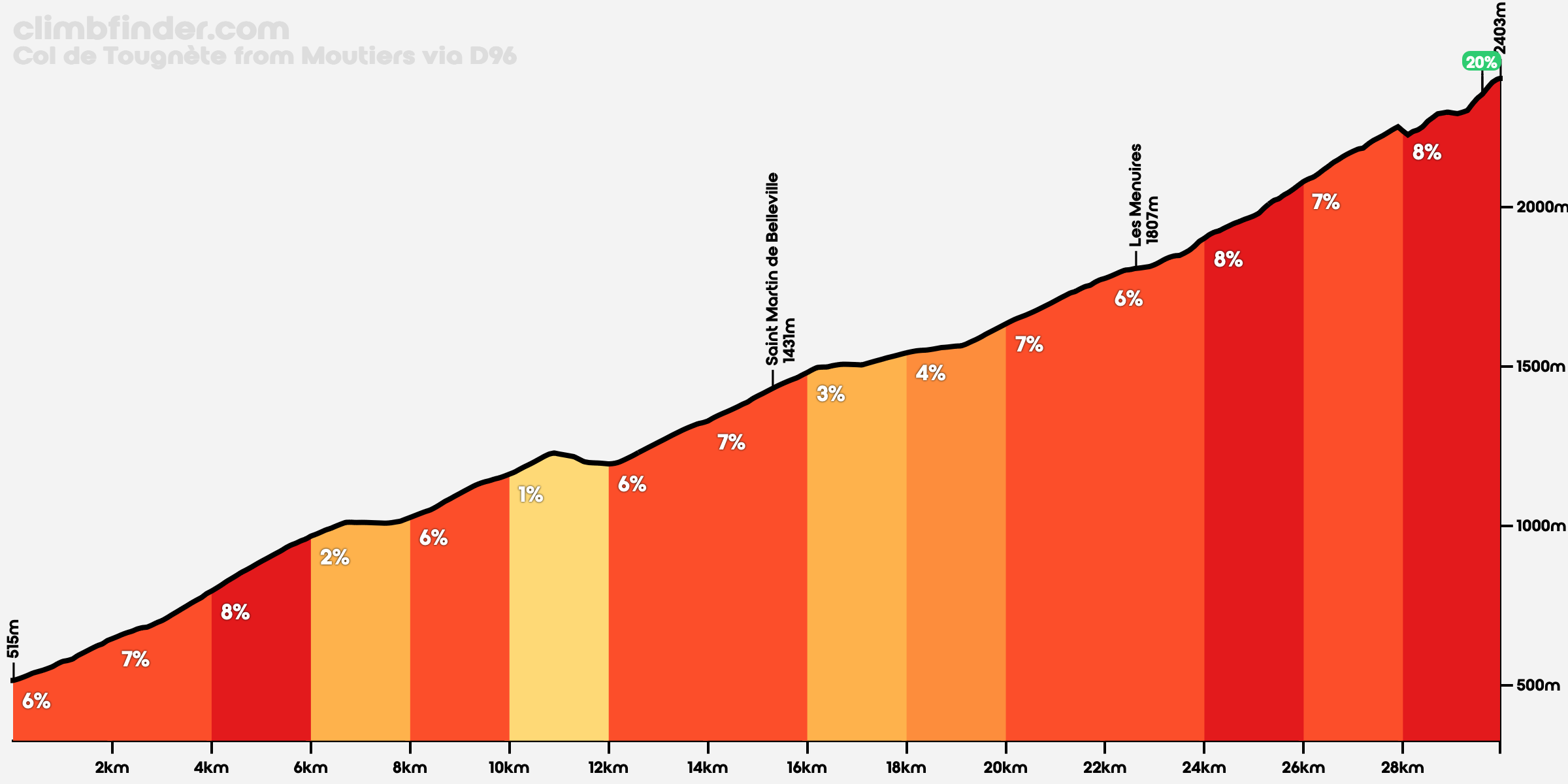
Quieter. Less structured. Harder to ignore.
- Narrower road
- Lower traffic
- More variation in gradient and terrain
The difference is subtle but important:
- Rhythm is interrupted earlier
- Effort fluctuates more
- Terrain becomes the reference instead of the road
This line forces earlier awareness.
Where the D117 allows you to settle, the D96 begins the destabilization process before the climb officially changes.
What This Changes
The lower climb is not neutral.
- D117: controlled effort, delayed consequences
- D96: early variability, earlier accumulation
Both carry the same cost, but one hides it longer, the other introduces it sooner.
The first 20+ kilometres are consistent with the French Alpine archetype:
- Steady gradients
- Continuous load
- No decisive ramps
You can ride this well, you can settle into rhythm, that is the trap.
Fatigue builds in a way that never forces immediate correction. You are allowed to ride too hard—because nothing requires you not to.
The cost is deferred.
Les Menuires → Col de Tougnète
The part that collects it.
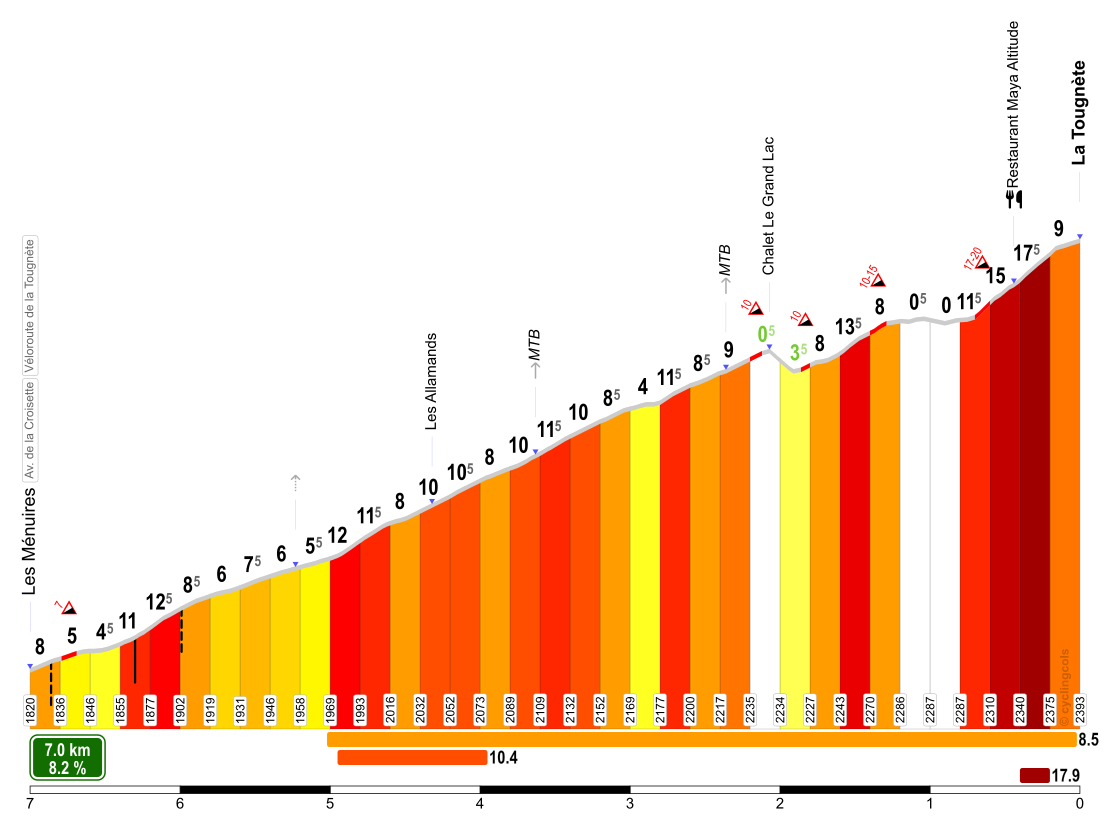
- ~8.3 km
- ~700 m elevation gain, ~8.5% average gradient
- Maximum ramps ~17–20%+
From Les Menuires, the climb leaves public roads entirely and follows a bike-only track across ski slopes.
Like the Loze, the surface is direct, but unlike the Loze, the structure is less chaotic and more decisive.
This section does not gradually destabilize you, it compresses everything that came before:
- Double-digit gradients appear repeatedly
- Short flatter sections exist—but only briefly
- A final sequence rises sharply toward ~17–20%+ ramps
The final 600 meters are not a variation, they are a grueling conclusion.
You arrive here with whatever capacity remains, the climb converts it directly into outcome. There is no additional pacing model to apply.
The Summit
The road ends above the ski infrastructure, exposed, without separation between terrain and sky. Altitude is not the defining feature here, position is.
From the summit ridge, the Trois Vallées opens in both directions in a breathtaking 360-degree panorama:
- Belleville valley below
- Méribel and the Loze visible across the divide
The connection is unfinished—but visible. You are not standing at a closed system, but at a node in a structure that is still evolving.
What It Demands
Tougnète is not a single-type climb.
It combines:
- Endurance load (long valley ascent)
- Threshold fatigue (sustained mid-climb pressure)
- Neuromuscular disruption (steep upper ramps)
These are normally separate problems in the French Alps.
Here, they are continuous and this is why it ranks as one of the most difficult climbs in France—the difficulty is not localized, it is cumulative.
There is no phase you can isolate or manage independently.
Why the Tougnète Matters
Tougnète is not defined by racing history, as it has none.
It matters because it compresses the logic of French climbing into a single line:
- Long enough to accumulate fatigue
- Steep enough to break control
- Irregular enough to remove rhythm
It exceeds well-known climbs not by outperforming them in one dimension, but by combining multiple forms of difficulty into one structure.
It is not spectacular, but it is complete.
Ride Col de Tougnète if
- you want to understand how different types of difficulty combine into one continuous effort
- you are comfortable riding long before intensity becomes decisive
- you are prepared for a climb that feels manageable—until it isn’t
Ride it if you want a reference point, not because it is the hardest in one way, because it shows how difficulty works when nothing is isolated anymore.
Bonus: Les Menuires → Val Thorens
From Les Menuires you can also continue to Val Thorens.
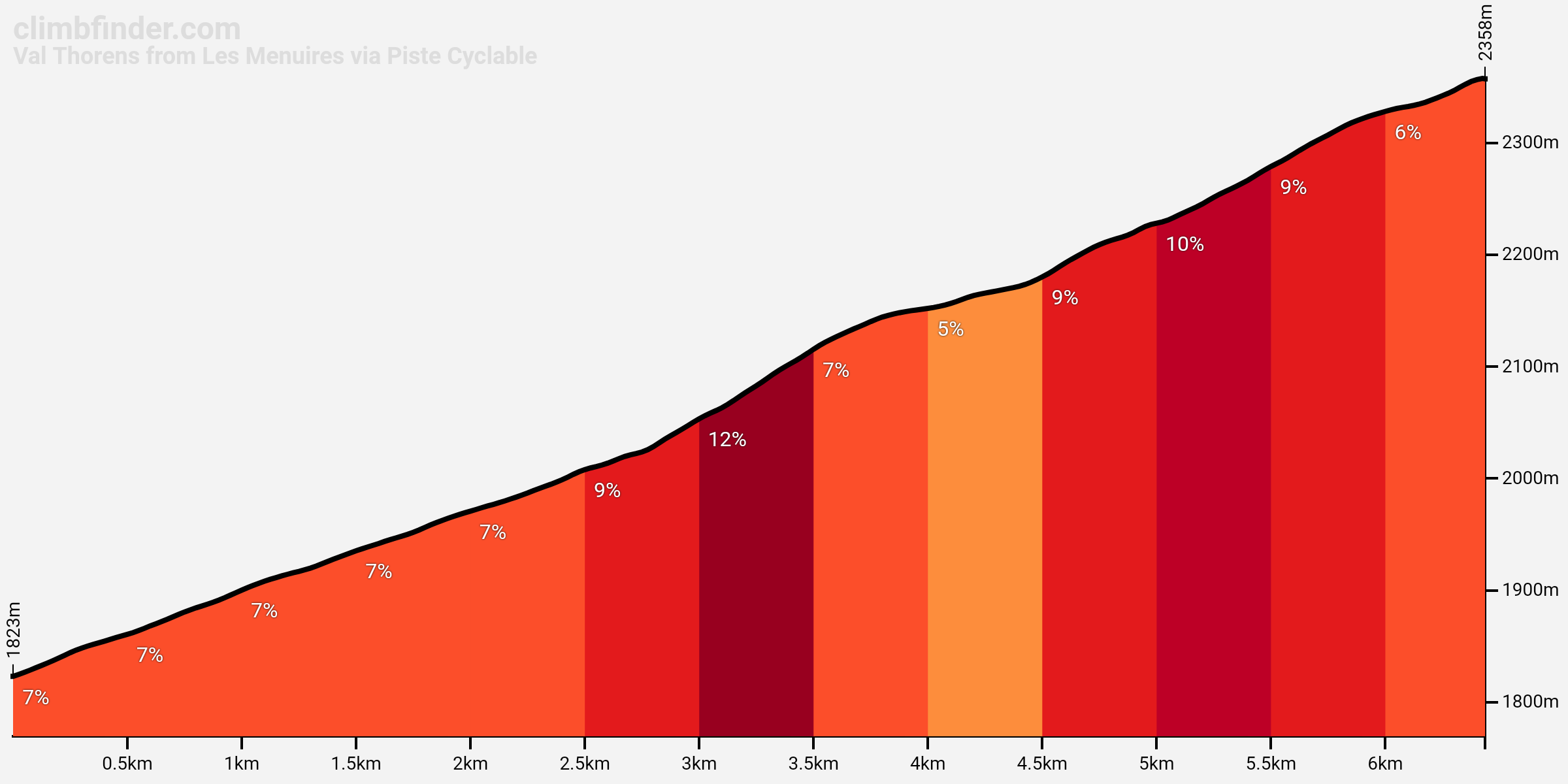
I did the full Val Thorens climb in 2012, via the then only connection, the continuation of the D117. But there’s now a high-altitude piste cyclable that continues upward toward Val Thorens:
- Part of the same bike-only network
- Built directly on ski infrastructure
- No attempt to smooth or regulate gradients
- The “upper section” becomes part of a longer high-altitude system