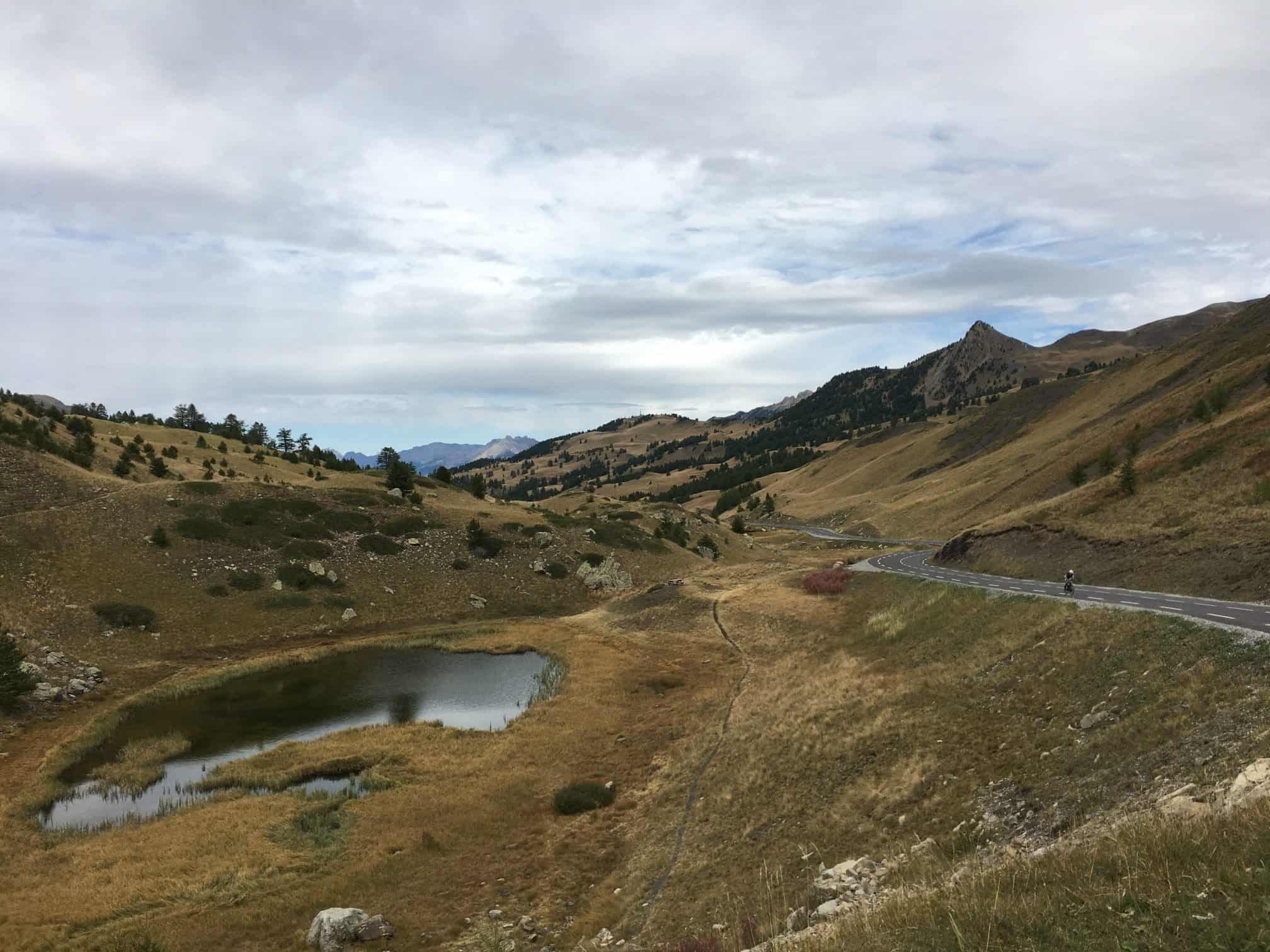
Valley connector
A functional crossing where the role in the landscape matters most
The Col de Vars (2,108m) is a mountain pass in the Southern Alps, on the border between the Hautes-Alpes and the Alpes-de-Haute-Provence in the Provence-Alpes-Côte d’Azur.
It connects the Ubaye valley with the Embrunais.
It is the highest French road pass open all winter, except in exceptionally unfavorable weather conditions.
The Vars is part of the Route des Grandes Alpes, connecting Lac Léman (Geneva) with the French Riviera (Menton).
But the main reason I created this page, is because it’s also part of the Brevet de 7 Cols d’Ubaye, which I obtained in my (first) Tour of 2014.
Of the cols on that Brevet, the Vars was the one that gave me the most trouble.
I labeled it among “Les Petits” as the Bonette, Cayolle and Allos are considerably longer, but as usual, I didn’t really look at the profile and the final of the Vars is really tough…
Why Ride the Col de Vars
The Col de Vars is not defined by a single iconic feature, but by how its effort is distributed across both sides of the climb. It works as a connector, but it does not ride like a neutral transition.
What sets Vars apart is that both approaches impose load — just at different moments:
- From the south (Jausiers), the climb develops gradually but becomes significantly harder in the final kilometres, where gradients increase and the accumulated effort starts to matter.
- From the north (Guillestre), the difficulty is front-loaded, with sustained effort required earlier in the climb before it settles into a more regular rhythm.
This creates a different kind of challenge:
- you are not reacting to one decisive section
- but to where in the climb the stress is applied
As a result, Vars suits riders who:
- pay attention to pacing distribution
- are comfortable managing effort over time
- and want a climb that fits into a broader route while still demanding respect
It is often ridden in combination with Izoard or Cayolle, where it functions as part of a larger structure—but unlike some connectors, it is never just filler.
Seasonal notes
The Col de Vars operates on a more flexible seasonal pattern than most high Alpine passes, particularly because it is one of the primary access routes into the Ubaye valley.
- Typically open year-round, barring short-term closures during severe winter conditions
- One of the more reliable crossings in this part of the Alps
- Winter accessibility depends on snowfall and clearing operations, but closure is not structural
However, standard Alpine considerations still apply:
- Conditions near the summit can differ significantly from the valleys
- Snowfall, ice, and wind exposure remain factors in colder months
- Summer afternoons may still bring storms, particularly on more open sections
The key difference is not the absence of risk, but the higher probability of access.
North–South comparison
The Col de Vars does not split into two completely different climbs, but the timing of the difficulty differs enough to affect pacing strategy.
North side (Guillestre)
- Effort is front-loaded
- Steady but noticeably harder in the first half
- Gradients ease slightly as the climb progresses
This side:
- forces you to commit early
- rewards riders who avoid going too hard at the start
- can feel easier later if paced correctly
South side (Jausiers / Ubaye)
- More gradual initial build-up
- Final kilometres become decisively harder
- The difficulty is back-loaded
This side:
- tempts you into overpacing early
- becomes more demanding precisely when fatigue sets in
- requires holding something in reserve for the end
Summary
This is not a contrast of identity, but of effort distribution:
The north side asks for control early; the south side demands it late.
That distinction is subtle—but for pacing, it matters.
Tour de France
The Col de Vars has been included 36 times in a stage of the Tour de France, including 23 since 1947. It’s often combined with the Izoard and/or Bonette in either direction, like in the last three stages the Vars was included in:
- 2024 Stage 19: Embrun to Isola 2000 with the Col de Vars followed by the Bonette.
- 2019 Stage 18: Embrun to Valloire, with the Col de Vars, followed by the Col d’Izoard and Col du Galibier.
- 2017 Stage 18: Briançon to Izoard, with the Col de Vars early in the stage.
Les Gleizolles
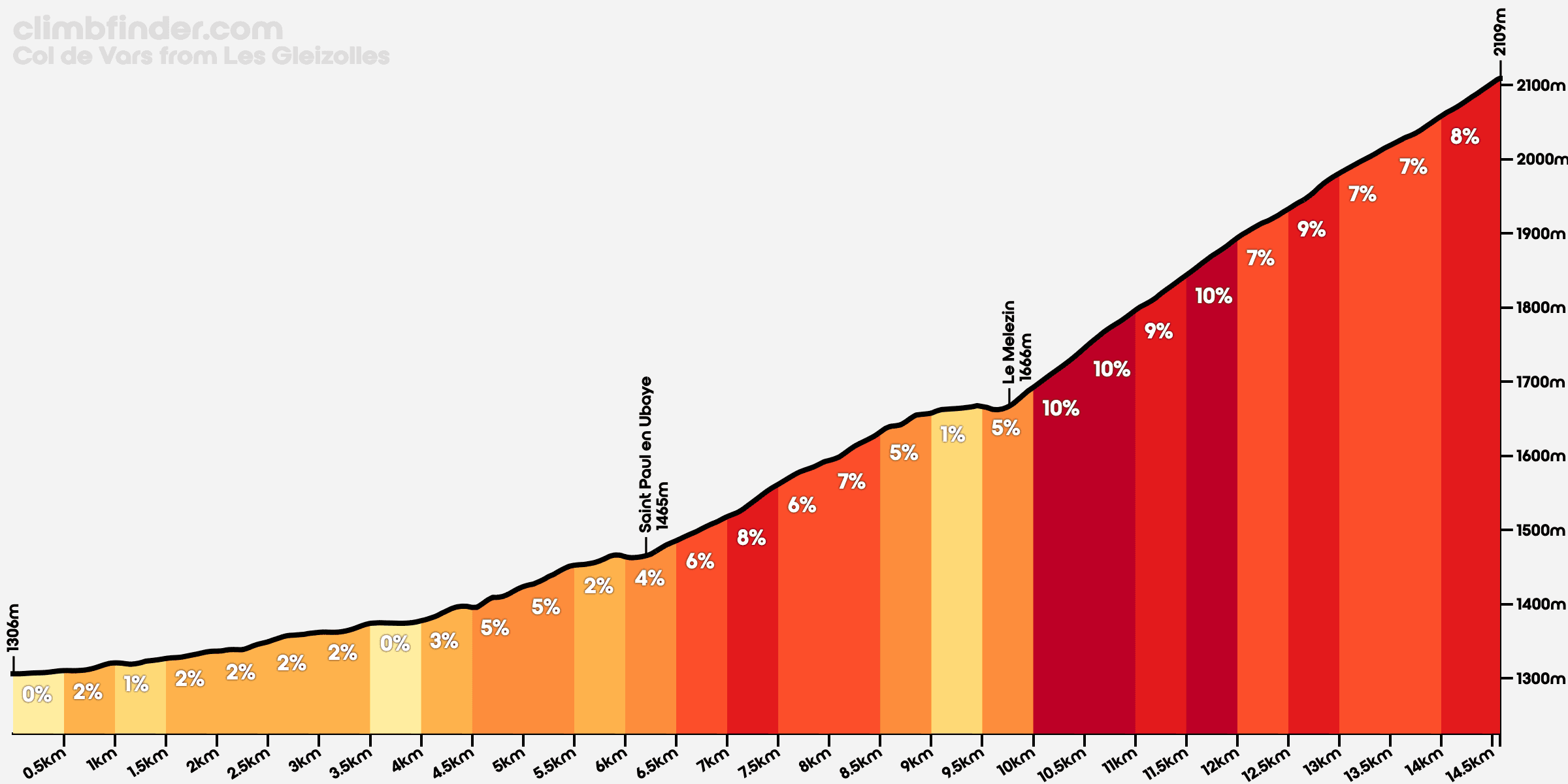
This ascent that is part of the Brevet, is 14.6 kilometers long at a modest 5.5%.
The first kilometers are a good warming up, then there’s a more serious stretch, but that pales in comparison to the final 4.5 kilometers. These average 8.9%, including a kilometer at 10.5%.
I did this end in stage 8 of my Tour de France 2014.
Guillestre
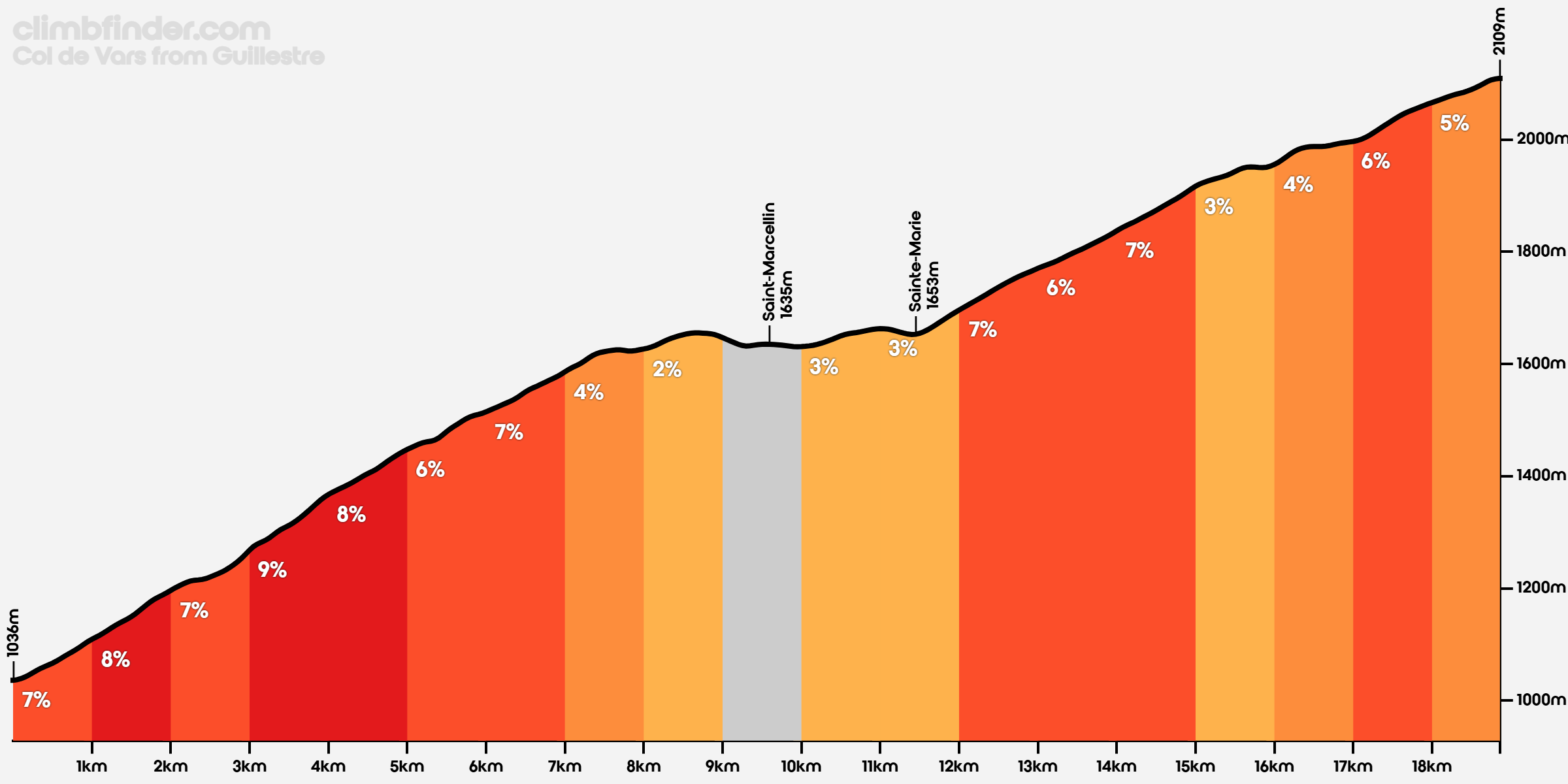
The northern ascent is 18.8 kilometers at an average of 5.7% with the hardest 5-kilometer stretch at the beginning, averaging 8.3% including a kilometer at 10%.
I’ve done this end in my Tour of 2017.